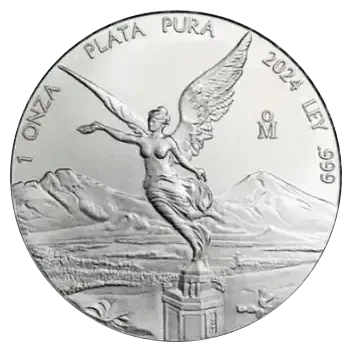
Libertad coins: varieties, errors and which label is really worth paying for
NGC vs PCGS: which Libertad varieties and errors each grading company recognises, how to identify them and what to check before paying a premium.
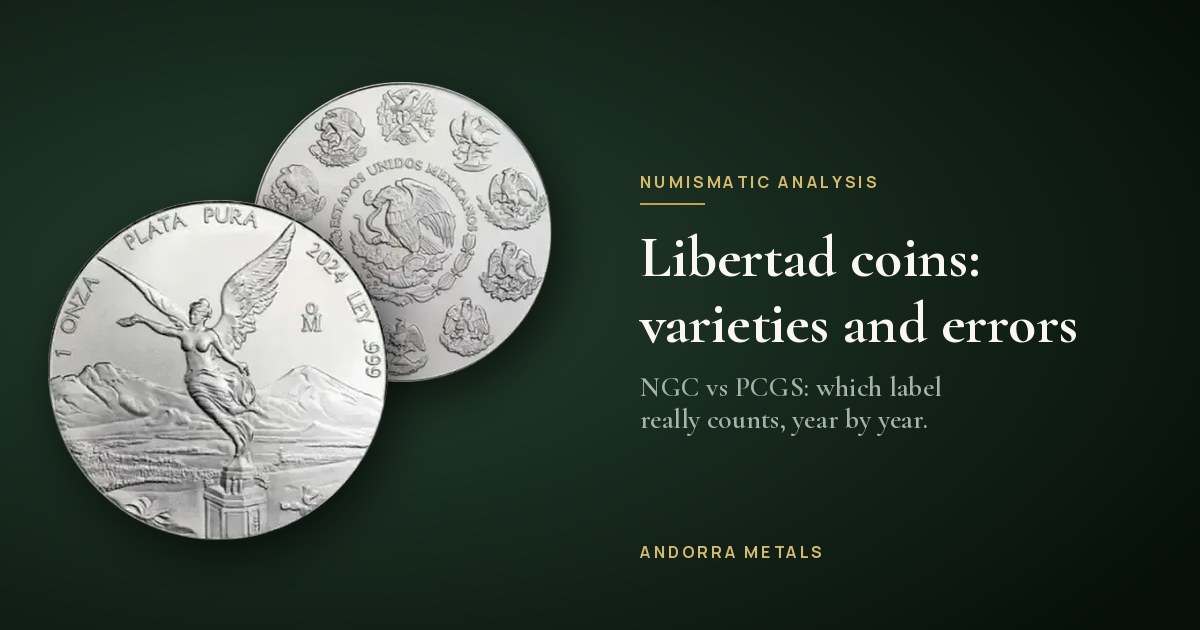
Census data: NGC (30/09/2026), PCGS and ANACS (02/10/2026).
Why I am writing this article
NGC is not the only grading company that recognises varieties of the Mexican Libertad. PCGS and ANACS study them too, but under different names, with different catalogues and at a different level of detail. The real problem is not that one company gets everything wrong: it is the lack of consistency between them.
Over the last few months, plenty of claims about Libertad varieties and errors have been circulating on YouTube and social media. Some are well founded. Others mix up concepts, repeat outdated population figures or sell a premium based on nothing more than a label.
Having reviewed the debate year by year along with the NGC and PCGS census data, my rule is simple: before paying a premium, check the coin, the certificate, the current population, actual sales and liquidity. A label or a video is no substitute for any of those five things.
Prefer to watch? We explain it in 10 minutes, year by year (video in Spanish).
Four things that are not the same
Most arguments start when anything unusual gets called an “error”. Before valuing a Libertad, you need to know which of these four categories it falls into.
| Category | What it is | Does it repeat? | Examples |
|---|---|---|---|
| Die variety | A feature created when the die was made or prepared | Yes, on every coin struck from that die | Doubled die (DDO/DDR), legend change, type change |
| Mint error | An accident while a single coin was being made | Usually not, or on very few coins | Lamination, off-centre strike, struck-through, mule |
| Die state | Wear, polishing, cracks, pitting or die chips | For as long as the die stays in use | Missing feathers, small raised marks, softened areas |
| Post-mint damage | Something that happened outside the Mint | No | Knocks, scratches, cleaning, corrosion, stuck-on fibres |
The most expensive commercial mistake is selling post-mint damage as a mint error. A single image is not enough: you have to look at the metal flow, the edges and the direction of the mark, and compare it with other examples.
NGC, PCGS and ANACS: three approaches, not one truth
All three companies can attribute varieties and errors, but they do not recognise exactly the same coins or give them the same names.
- NGC attributes varieties through its VarietyPlus programme, often only when the customer asks, for $20 per coin according to its catalogue. That is why many Libertad varieties became known through its labels.
- PCGS keeps registries, populations and collection sets for the Libertad and its varieties.
- ANACS grades coins and can study varieties or errors at the customer's request. In its census, the 1982 doubled die appears as “DBL DIE OBV”, in other words using the same criterion as PCGS (DDO). Its census can only be viewed with an account on its portal.
- NCV Grading grades coins in Mexico and attributes Libertad varieties and errors. Its label also shows the coin's weight, a useful detail that NGC and PCGS do not provide.
The catalogue, the terminology, the evidence required and the labelling policy all differ. So a variety that appears on an NGC slab but not on a PCGS one does not prove that either company is wrong.
An example: a 2015 2 oz Proof Libertad was submitted requesting “Missing Feathers” and came back labelled “Detached Wing”. That is a difference in naming. It would only be a misdiagnosis if the coin did not show the feature described, and that is checked coin by coin, with photos and the certificate number.
Year by year: the Libertads in the debate
They do not all have the same backing. The 1999/2000 mule and the 1998 date are the strongest cases; “missing feathers”, fibres and textures call for the most caution. Mintages should be checked against the official source before being used in a sale.
| Year | Feature | Type | My assessment |
|---|---|---|---|
| 1982 | Doubled and tripled dies (base mintage approx. 1.05 million) | Die variety | Solid: NGC recognises DDR #1, DDR #2 and TDR; PCGS, one DDO |
| 1983 | Laminations and planchet flaws | Individual error | Coin by coin; separately, NGC recognises a DDR |
| 1984 | “Iron wing” | Nickname with no backing | No grading company recognises it |
| 1987 | Doubled die | Die variety | Solid; NGC calls it DDR and PCGS DDO |
| 1988 | DDR-001, DDR-002, feathers under the wing and fibres | Variety + possible errors or damage | DDR solid at NGC; feathers NGC only (25); fibres unsupported |
| 1989 | Dot present or missing in “.999” | No recognised variety | No company distinguishes two versions |
| 1991 | Type 1 / Type 2 (base mintage 1,650,518) | Type change, not an error | Solid at PCGS and ANACS; NGC does not separate them in MS |
| 1992 | “Missing Feather Detail” | Probably an over-polished die | NGC only (97): premium depends on the label |
| 1998 | Die chip on the eagle's head | Die state | The date is already scarce (67,000); the die chip is recognised by PCGS (143) and NCV, not by NGC or ANACS |
| 1999/2000 | Mule: 2000 obverse with 1999 reverse | Major error | The clearest case; 16 at NGC, 9 at PCGS and 20 at ANACS |
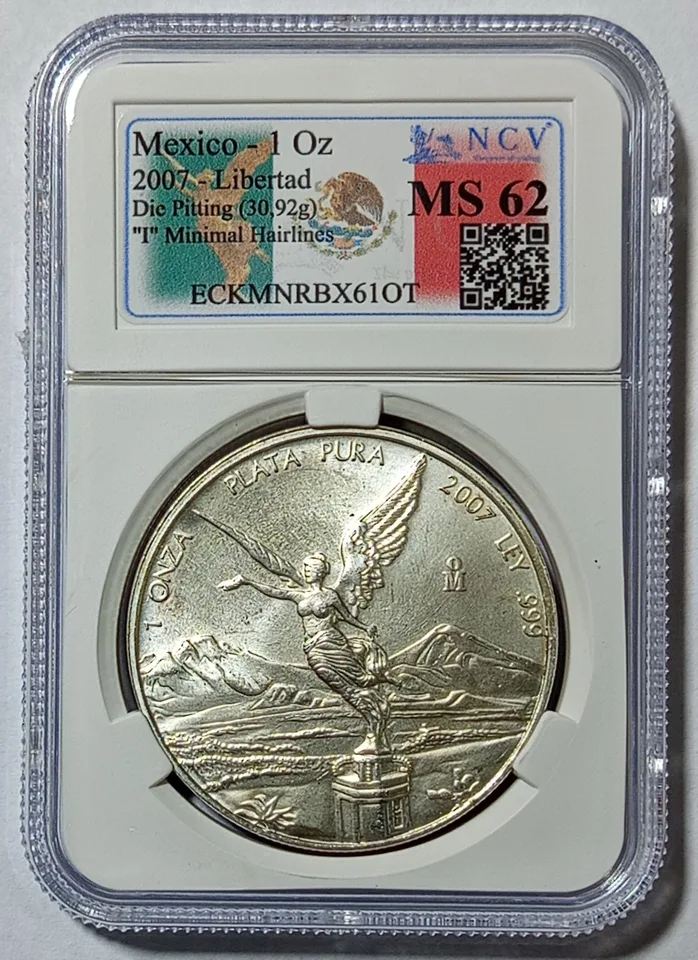
| 2007 | Struck-through, textures and die pitting | Possible error, damage or die state | Not recognised by NGC or PCGS; NCV attributes “Die Pitting” |
| 2015 (2 oz Proof) | “Missing Feathers” vs “Detached Wing” | Naming difference | An example of naming, not rarity |
With the 1998 you need to separate two premiums: the date premium, which is objective because of the low mintage, and the die-chip premium, which depends on the feature being visible, repeatable and recognised. Today PCGS and NCV recognise it; in an NGC slab that coin is listed as a normal 1998. A 1998 without the die chip is already valuable in its own right.
The 1999/2000 mule has featured in specialist press such as Coin World and in Heritage auctions, including an NGC MS66 example. Its commercial strength is that anyone can understand the error: two dies that should never have worked together.
NGC vs PCGS: what the census data says today
I compared NGC's Census (checked on 30/09/2026) with the PCGS Population Report (02/10/2026). Neither recognises more varieties than the other: each recognises some the other does not, and sometimes they give the same coin different names.
| Coin | NGC (MS) | PCGS (MS) |
|---|---|---|
| 1982 doubled die | DDR #1: 509 · DDR #2: 49 · tripled (TDR): 84 | DDO: 281 |
| 1983 doubled die | DDR: 240 | Not recognised |
| 1984 “iron wing” | Not recognised | Not recognised |
| 1987 doubled die | DDR: 422 | DDO: 624 |
| 1987 lettered edge | 60 | Not recognised |
| 1988 doubled die | DDR-001: 86 · DDR-002: 80 | DDO: 66 |
| 1988 feathers | Missing Feathers Under Arm: 25 | Unfinished Wing: 1 |
| 1988 fibres | Not recognised | Not recognised |
| 1989 dot in “.999” | Not distinguished (normal: 633) | Whole date as “no dot”: 861 |
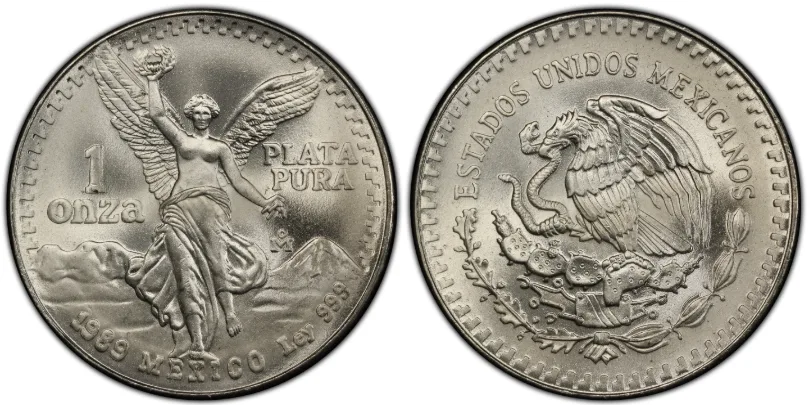
| 1989 doubled die | DDR #1: 60 | Not recognised |
| 1991 Type 1 / Type 2 | Not separated in MS (1,102); “Large Onza” in MSPL only: 9; a “Small Onza Doubled Die Reverse” is catalogued, with no coins in the census | 1,496 / 637 |
| 1992 Missing Feather Detail | 97 | Not recognised |
| 1998 normal | 1,002 | 908 |
| 1998 die chip on the eagle's head | Not recognised | 143 |
| 1999/2000 mule | “1999 Obverse of 2000 - Mule”: 16 | “(2000)/1999 Mule with 1999 Rev”: 9 |
| 2007 | Normal only: 1,040 | Normal only: 687 |
The 1998 mintage of 67,000 coins matches the PCGS listing. MSPL (prooflike) rows are excluded except where they are the only reference.
Where the grades cluster at PCGS
The PCGS Population Report also shows which grades the graded coins fall into. For the key varieties:
| Coin (PCGS) | Total | Most common grade | Highest grade |
|---|---|---|---|
| 1982 DDO | 281 | MS67 (94) | MS68 (15) |
| 1987 DDO | 624 | MS67 (279) | MS68 (64) |
| 1988 DDO | 66 | MS67 (25) | MS68 (9) |
| 1991 Type 1 (PLATA PURA) | 1,496 | MS68 (641) | MS69 (176) |
| 1991 Type 2 (PLaTA PuRA) | 637 | MS68 (228) | MS69 (163) |
| 1998 normal | 908 | MS68 (246) | MS70 (6) |
| 1998 die chip | 143 | MS67 (48) | MS69 (22) |
| 1999/2000 mule | 9 | MS66 (3) | MS68 (1) |
Three useful takeaways:
- No Libertad variety reaches MS70 at PCGS. The normal 1998 has 6 coins in MS70, but the die chip tops out at MS69. A die chip in MS69 is at the ceiling of its population.
- The doubled dies top out at MS68. The 1982, 1987 and 1988 DDO all peak at MS68, one grade below the 1991 Type 2 and the 1998 die chip, which reach MS69.
- The mule almost never appears in high grade: of the 9 coins, only one reaches MS68.
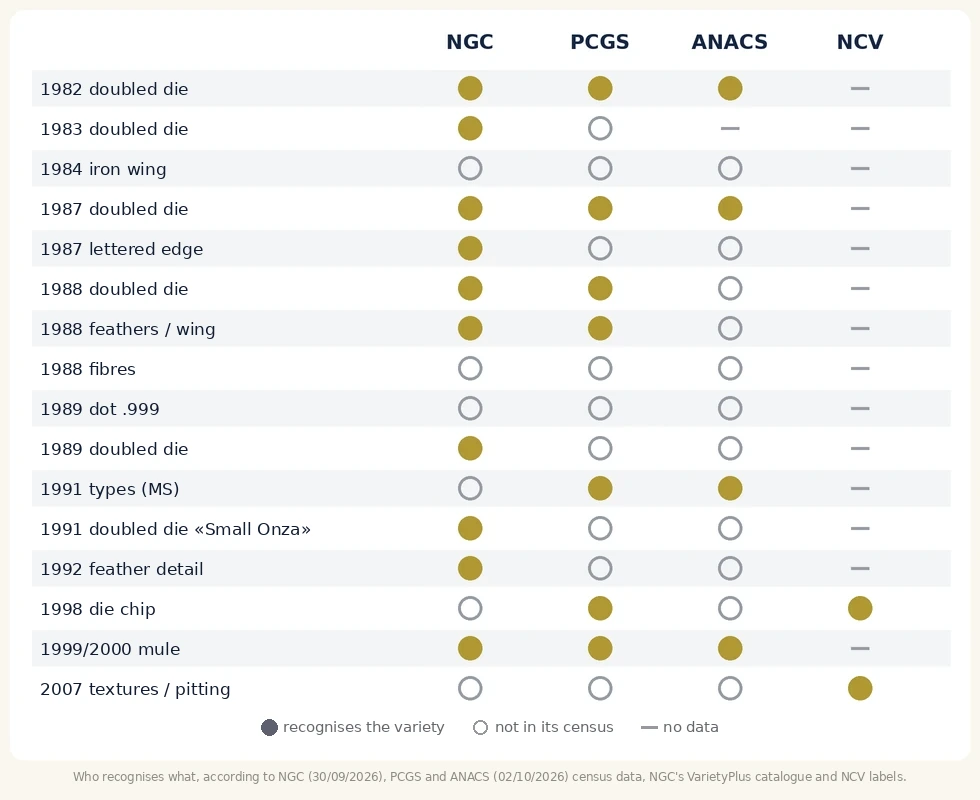
Five takeaways that change the debate:
- The claim that only NGC recognises varieties does not hold up. PCGS recognises the 1998 die chip and the two 1991 types in MS, which NGC does not separate. ANACS also separates the two 1991 types.
- The 1982, 1987 and 1988 doubled dies are called DDR by NGC and DDO by PCGS and ANACS. Everything points to the same variety under two names; that is where the idea of a 1987 with both a DDO and a DDR comes from. Even PCGS is not consistent: it calls the doubling on the Victory side DDO, yet on the mule it labels that same side as the reverse (“with 1999 Rev”). For the Bank of Mexico, the obverse is the coat-of-arms side, which is NGC's criterion.
- The mule adds up to 45 coins across three grading companies, not 4: 16 at NGC, 9 at PCGS and 20 at ANACS. Even so, that is not the worldwide total: some may have crossed over and been counted twice, and others have never been graded.
- “Iron wing”, fibres, the 1989 dot and the 2007 textures have no support in the NGC and PCGS census data. They are nicknames or one-off coins, not varieties. For 2007, however, NCV does attribute die pitting (“Die Pitting”): we look at it in the card.
- NGC recognises varieties that were not part of the debate: the 1983 and 1989 doubled dies and the 1987 lettered edge.
What the NGC census does not cover
Looking at the full NGC census for the silver ounce, what stands out is how little it records from 1990 onwards. The only varieties listed are the 1991 “Large Onza” (9, prooflike only), the 1992 “Missing Feather Detail” (97) and the 1999/2000 mule (16). There is no row for the 1991 Type 2 in MS or for the 1998 die chip, both of which PCGS recognises. Its VarietyPlus catalogue does include a 1991 “Small Onza Doubled Die Reverse”, but with no certified coins in the census.
That leaves a real gap: there is no public catalogue of Libertad varieties with clear diagnostic criteria and equivalences between the names each grading company uses.
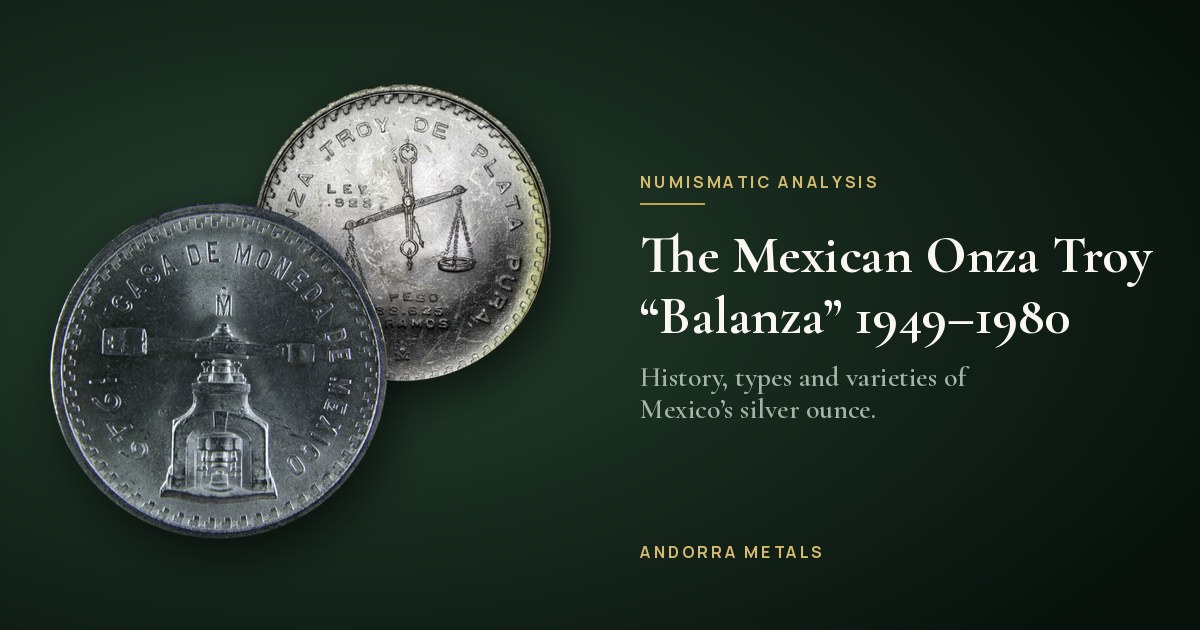
The same NGC census also covers the silver ounces that preceded the Libertad: the 1949 coin and the 1978–1980 issues, which we analyse in the article on the Mexican Onza Troy “Balanza” (1949–1980). There you do find date and legend varieties with very low populations, worth checking with a loupe in any lot of old onzas:
| Coin | NGC (MS) |
|---|---|
| 1980 “8/8” | 7 |
| 1979, balance pan between “U” and “N”, dot before date | 10 |
| 1980, “0” slanted left | 11 |
| 1980, “80” slanted left | 12 |
| 1980/70 | 13 |
| 1978 7/7, wide “Casa de Moneda” | 26 |
| 1979/9, balance pan between “U” and “N” | 28 |
| 1979, balance pan pointing to “U”, dot before date | 28 |
A low population may reflect few submissions rather than rarity alone. But these are attributions NGC already puts on its labels, so the premium is easier to justify than one based on a social-media nickname.
Illustrated identification guide, year by year
Each card explains what to look for on the coin, how to tell a genuine variety from damage and what name it carries on NGC and PCGS labels. Populations: NGC as of 30/09/2026 and PCGS as of 02/10/2026.
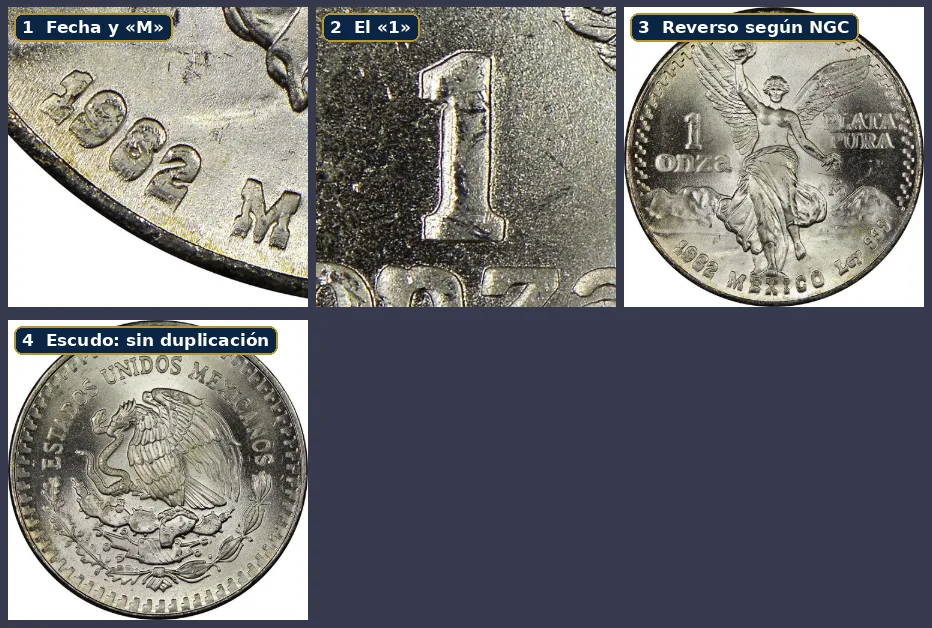
The exact position of each feature should be confirmed with the diagnostic photos from NGC VarietyPlus and PCGS CoinFacts, or from NCV Grading. The 1982, 1983, 1987 and 1988 entries include NGC's diagnostic photos.
Minimum kit: a 10x loupe, angled light (a tilted lamp reveals relief and doubling), a precision scale (31.1 g for the ounce) and callipers. Never clean the coin: cleaning destroys value and can mimic an error.
1982 · Doubled and tripled dies
Medium risk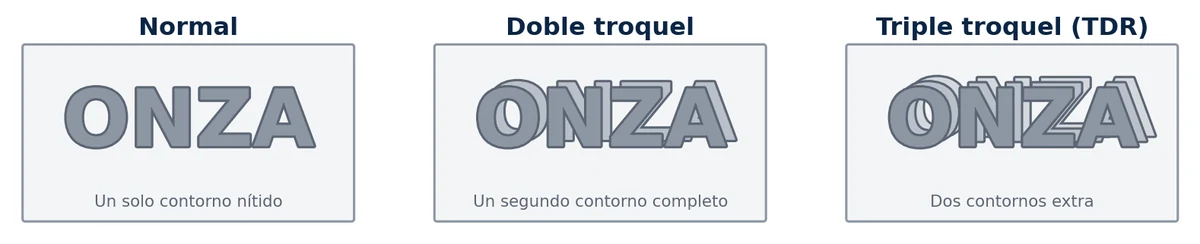
- What it is
- Die varieties: the die was engraved with two or three slightly offset impressions, so every coin it struck repeats the flaw.
- How to identify it
- With a loupe and angled light, check the legends, numerals and date. Look for a complete, rounded second outline separated by small notches, running in the same direction across several elements. On the tripled die, two extra outlines appear.
- How to rule it out
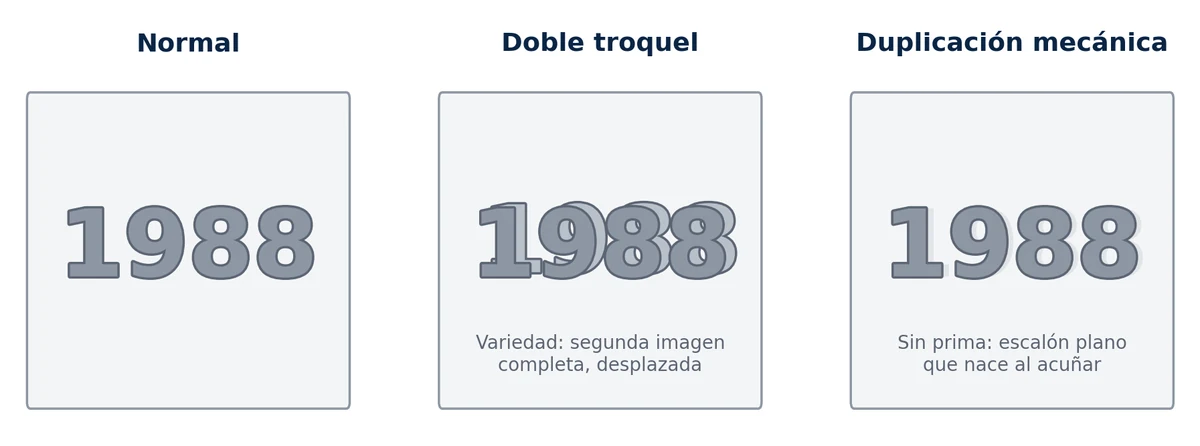
- If the “doubling” is a flat, low shelf hugging the letter, it is machine doubling: it happens during striking and carries no premium.
- Labels
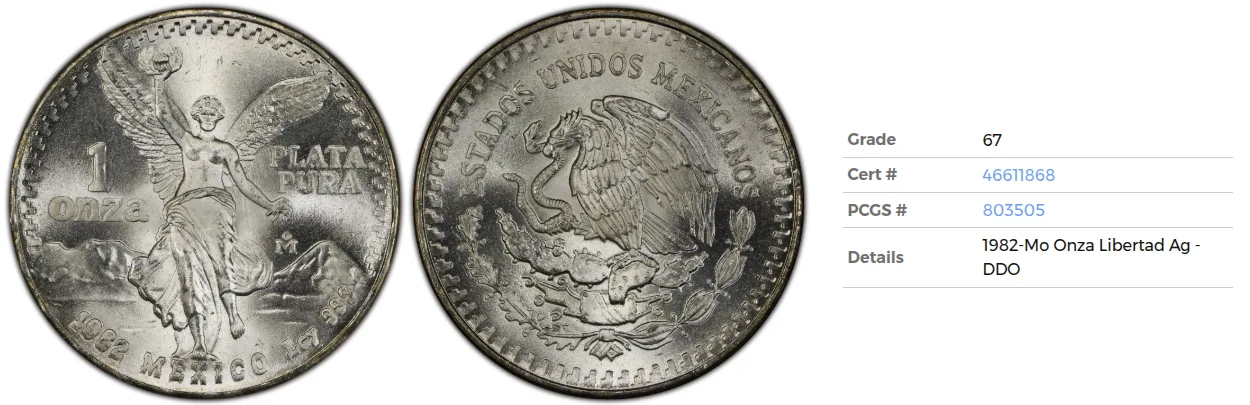
- NGC: DOUBLED DIE REVERSE #1 (509), #2 (49) and TRIPLED DIE REVERSE (84). PCGS: DDO (281). ANACS: DBL DIE OBV (5, the finest in MS67).
1983 · Lamination and planchet flaws
Coin by coin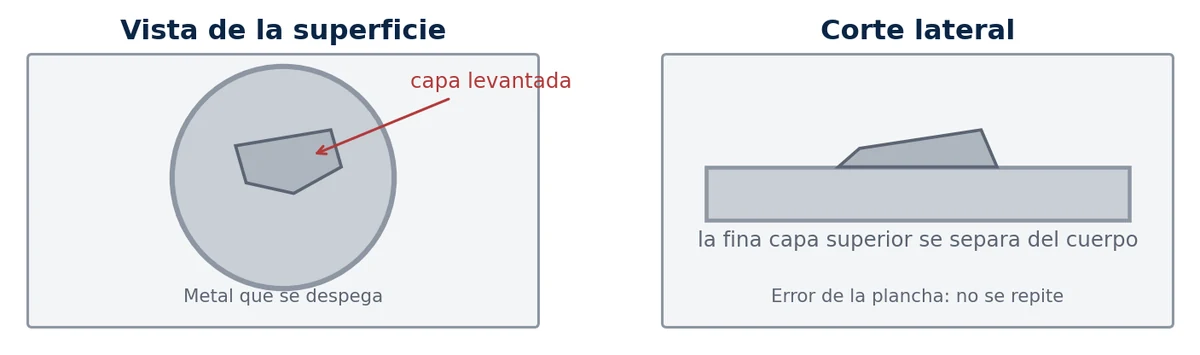
- What it is
- A flaw in the metal planchet, not the die: a thin layer separates from the surface. Every coin is different.
- How to identify it
- A lifted or detached layer with irregular edges that looks like a flake; sometimes it leaves a hollow with a rougher base.
- How to rule it out
- A knock or scratch has a direction and pushes metal to the sides; a lamination does not.
- Labels
- Graded as an error, coin by coin. Separately, NGC recognises a 1983 DOUBLED DIE REVERSE (240).
1984 · “Iron wing”: the repetition test
High risk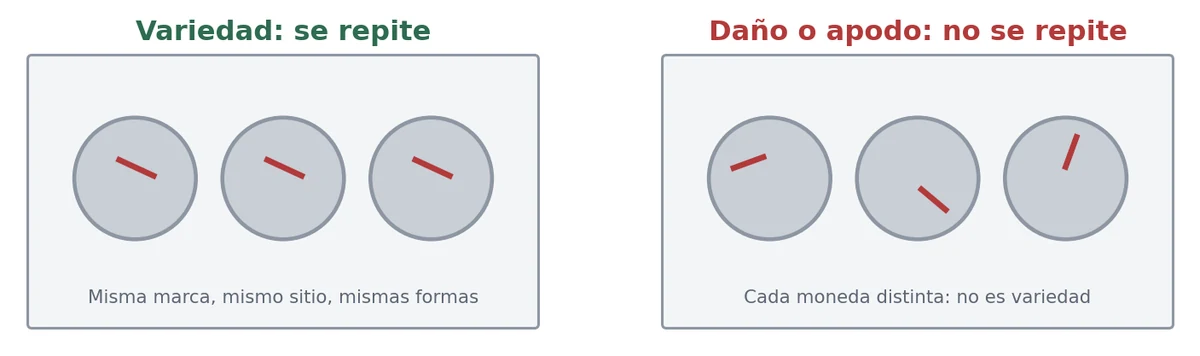
- What it is
- A social-media nickname with no backing: neither NGC nor PCGS recognises it as a variety.
- How to identify it
- Apply the repetition test: compare at least three examples. A die variety looks the same, in the same place and with the same shape, on all of them.
- How to rule it out
- If the mark changes shape or position from coin to coin, it is damage, wear or handling.
- Labels
- None: not NGC, PCGS or ANACS (69 coins from 1984, all normal). Do not pay a premium for the nickname.
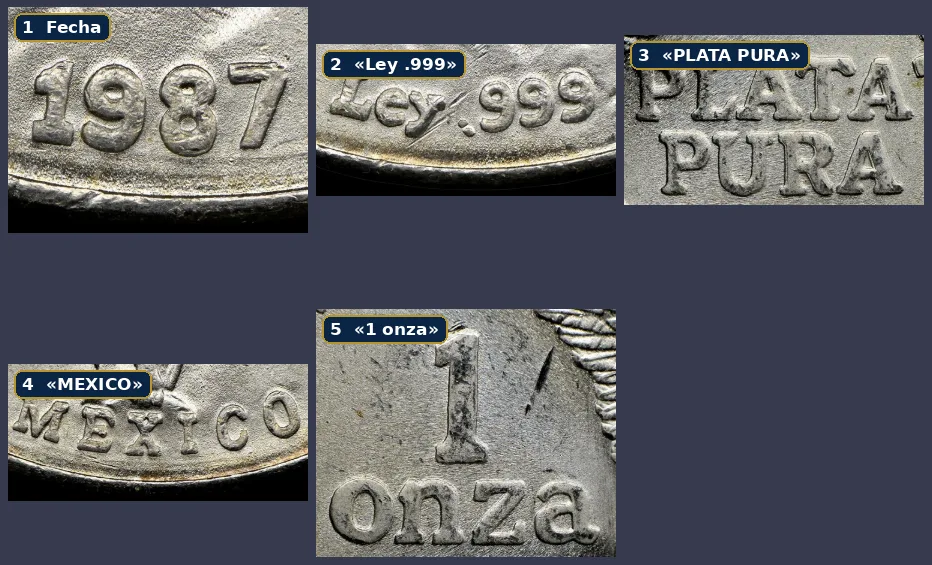
1987 · Doubled die and lettered edge
Medium risk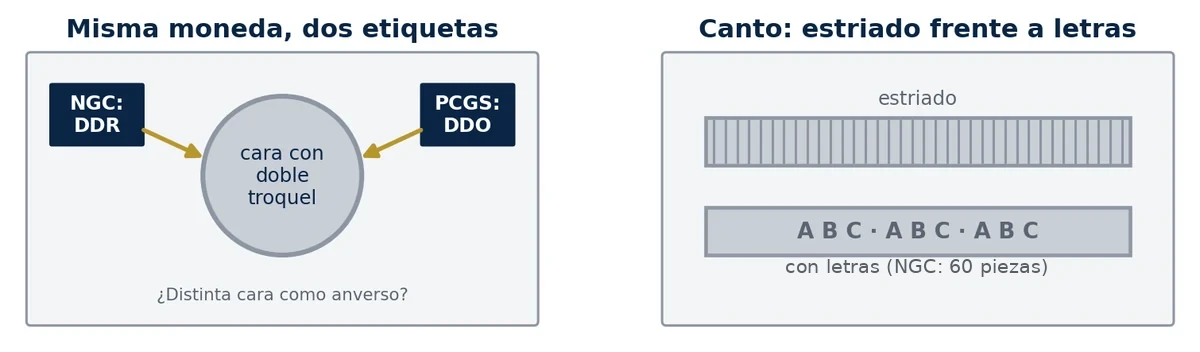
- What it is
- A doubled-die variety that NGC calls “reverse” and PCGS “obverse”. Everything points to the same coin under two names. NGC also recognises a lettered-edge variety.
- How to identify it
- The doubled die, as with 1982. The edge: turn the coin and look at the rim; instead of reeding, you will see lettering.
- What the NGC photos confirm
- The doubling is on the Winged Victory side, which NGC calls the reverse. Everything suggests PCGS treats that side as the obverse, which is why it labels the same coin DDO.
- Labels
- NGC: DOUBLED DIE REVERSE (422) and LETTERED EDGE (60). PCGS: DDO (624). ANACS: DBL DIE OBV (29); it does not list the lettered edge.
- Not a scarce variety at all
- At all three companies, the 1987 doubled die appears almost as often as the normal 1987, or more: NGC has 422 DDR against 295 normal; PCGS, 624 DDO against 439; and ANACS, 29 against 37. Either the doubled die is very common for that date, or it is mainly graded when someone has one. Either way, the premium should be modest.
1988 · DDR-001, DDR-002, feathers and fibres
Medium risk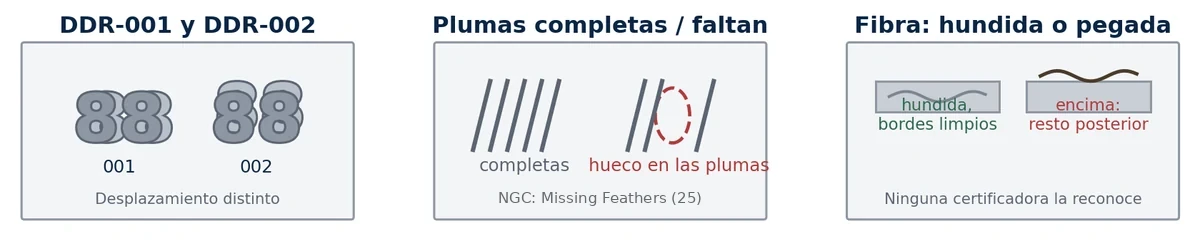
- What it is
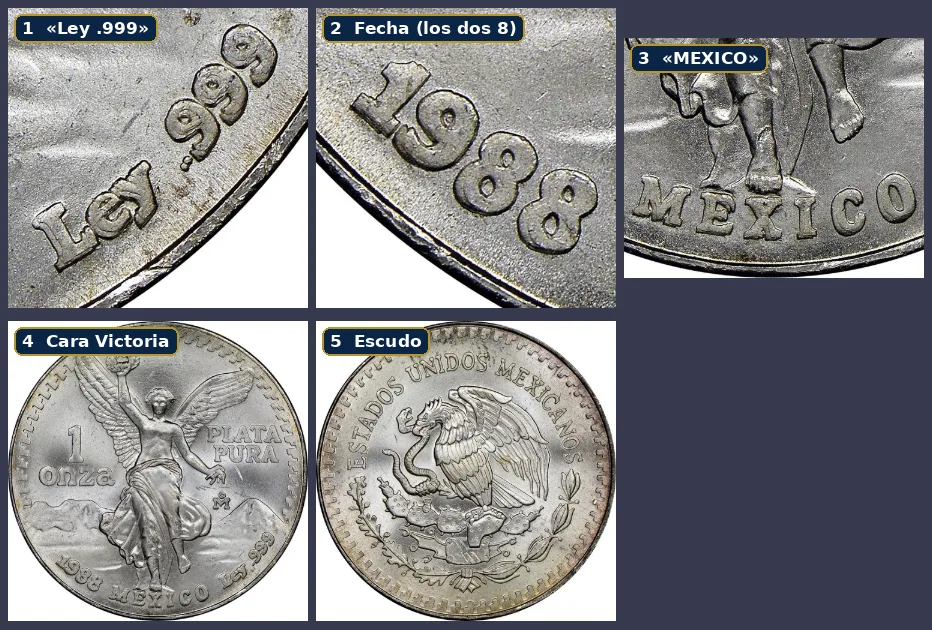
- Two doubled-die varieties from different dies, a variety with feathers missing under the arm, and fibres that are not a variety.
- How to identify it
- DDR: compare the direction and size of the offset with NGC's diagnostic photos to tell whether it is 001 or 002. Feathers: look for gaps where the feather lines under the arm should be.
- Fibres
- Sunk into the metal with clean edges: possibly struck-through, coin by coin. Sitting on the surface: residue or later dirt, worthless.
- Labels
- NGC: DDR-001 (86), DDR-002 (80), MISSING FEATHERS UNDER ARM (25). PCGS: DDO (66), Unfinished Wing (1). ANACS: no varieties; only 14 normal 1988 coins. Fibres: none.
1989 · Dot in “.999” and doubled die
No premium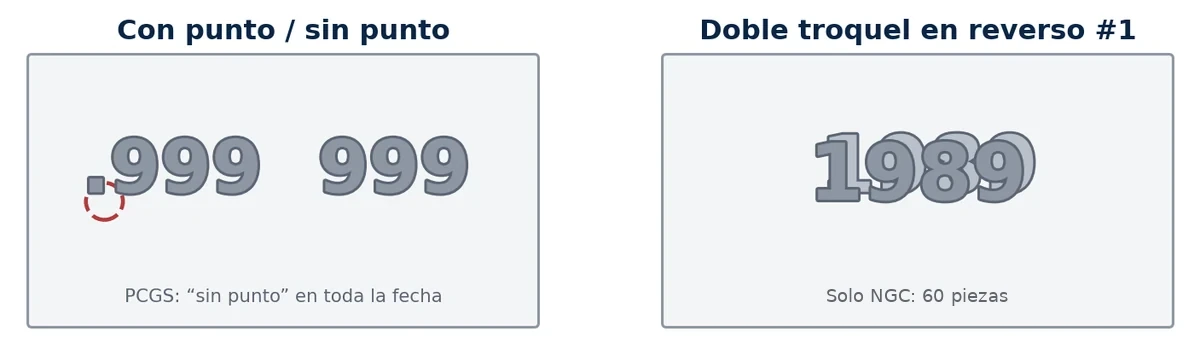
- What it is
- The dot is not a variety: PCGS labels the whole date as “no dot” and NGC does not distinguish it. NGC does, however, recognise a doubled die.
- How to identify it
- Do not pay a premium for the dot. Look for the doubled die on the numerals and legends, as with 1982.
- Labels
- PCGS: w/o Dot before 999 (861, the whole date). NGC: DOUBLED DIE REVERSE #1 (60). ANACS: neither the dot nor a doubled die; 18 normal 1989 coins.
1991 · Type 1 and Type 2
Low risk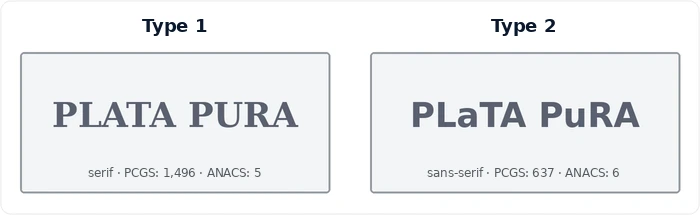
- What it is
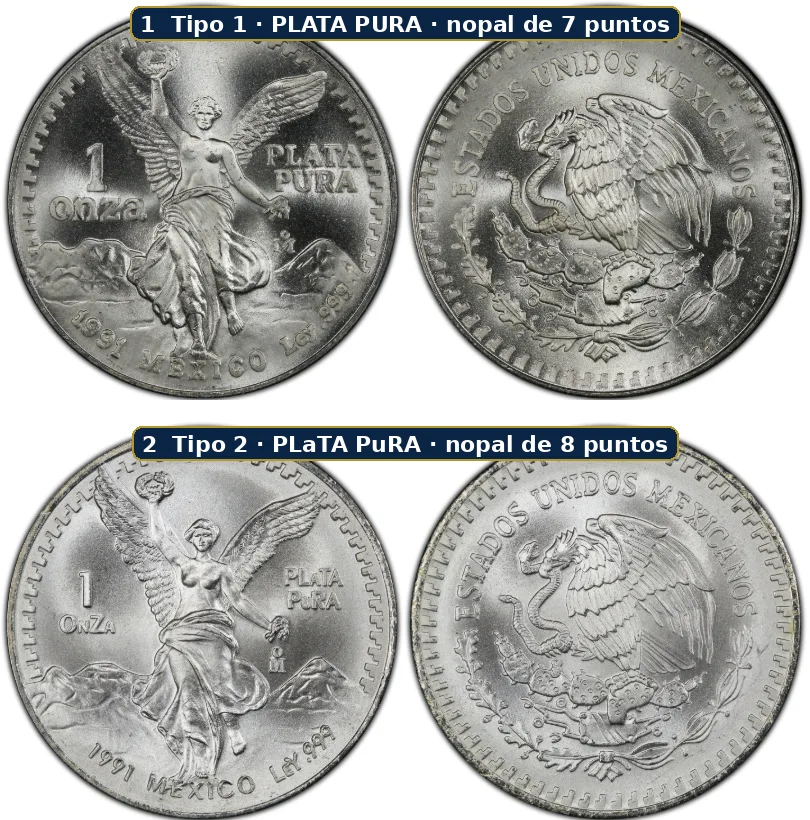
- A design change, not an error. It is told apart by the typeface of the legend.
- How to identify it
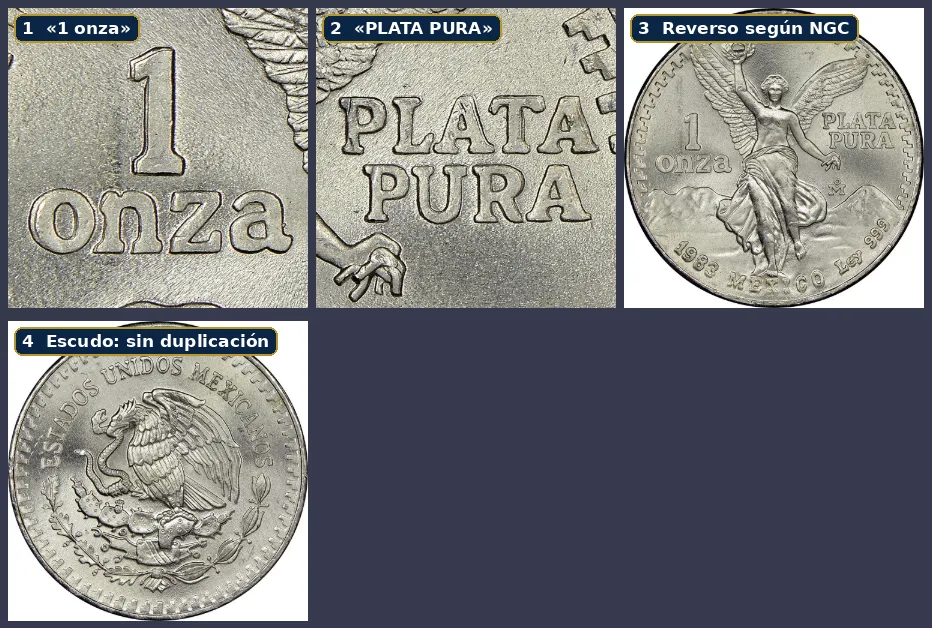
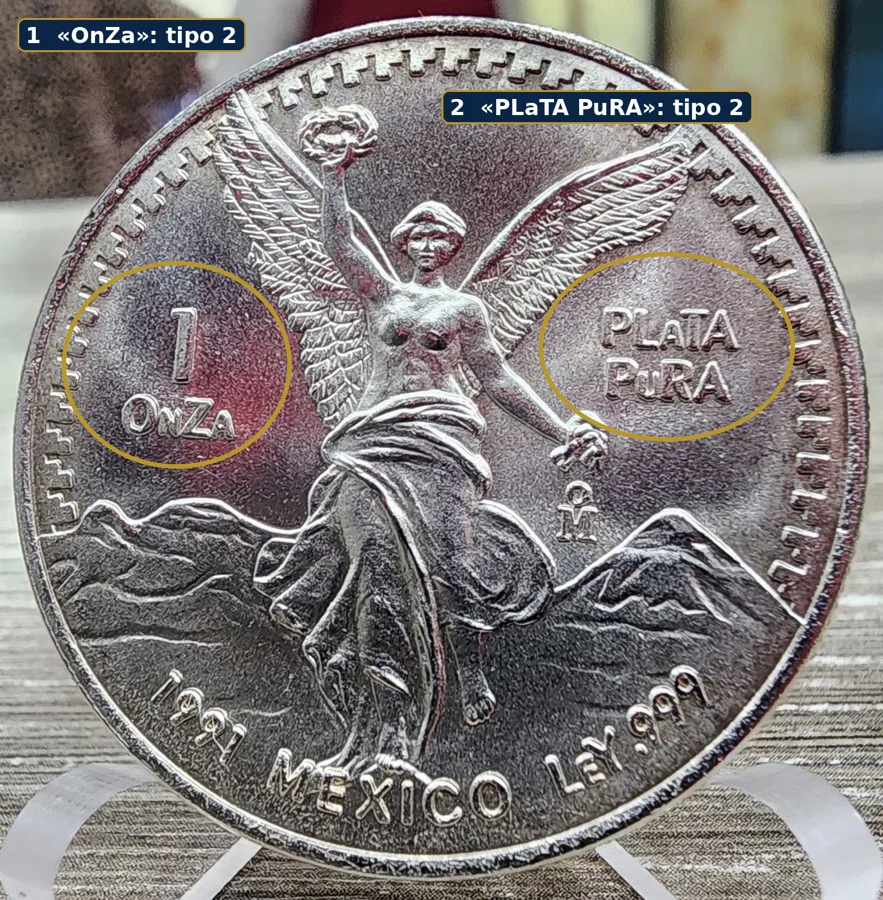
- Type 1: serif lettering in “PLATA PURA”. Type 2: sans-serif lettering with lower-case letters mixed in, as in “PLaTA PuRA” or “OnZa”. On the obverse there is a second difference: the cactus pad below the eagle's left talon can have eight or seven dots. Numista links eight dots to Type 1 and seven to Type 2, but PCGS has graded both crossed combinations: Type 1 with a seven-dot cactus and Type 2 with an eight-dot cactus. The dots are independent: the type is defined by the reverse legend, and the cactus dots are an extra detail that PCGS already notes on the label.
- Labels
- PCGS: PLATA PURA (1,496) and PLaTA PuRA (637). At PCGS, the Type 2 accounts for just under a third of graded 1991 coins (637 of 2,133). NGC does not separate them in MS (1,102); “Large Onza” in MSPL only (9). NGC has also catalogued in VarietyPlus a “Small Onza Doubled Die Reverse”, a doubled die on the small-“onza” version (the Type 2), but today has no coins in its census. ANACS separates them by their Krause catalogue number: KM-494.2, the Type 1 (5 coins), and KM-494.3, the Type 2 (6 coins), plus 27 unattributed.
1992 · Missing Feather Detail
High risk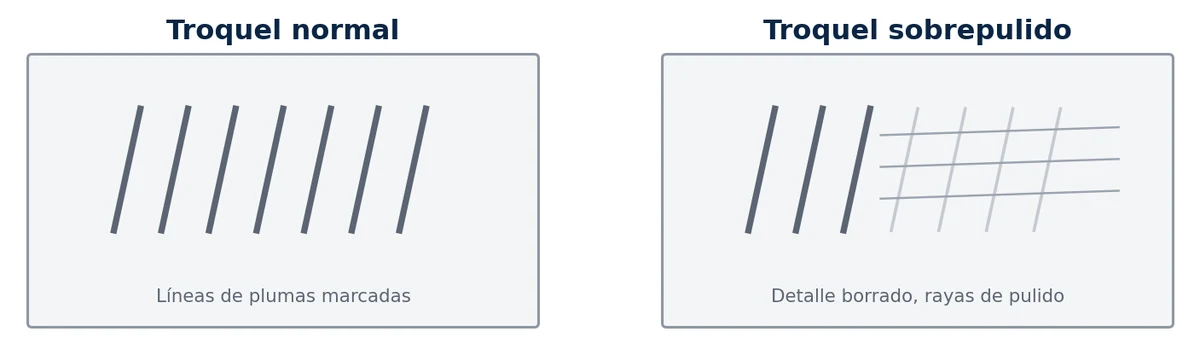
- What it is
- Loss of detail in the feathers, probably from over-polishing the die. Only NGC recognises it.
- How to identify it
- Softened or erased feathers next to normal areas, sometimes with fine polishing lines in the nearby field.
- How to rule it out
- Circulation wear affects the high points of the whole design, not just one area.
- Labels
- NGC: MISSING FEATHER DETAIL (97). PCGS: not recognised; it would come back as a normal 1992. ANACS: does not recognise it either (only 26 normal 1992 coins).
1998 · Die chip on the eagle's head
Low risk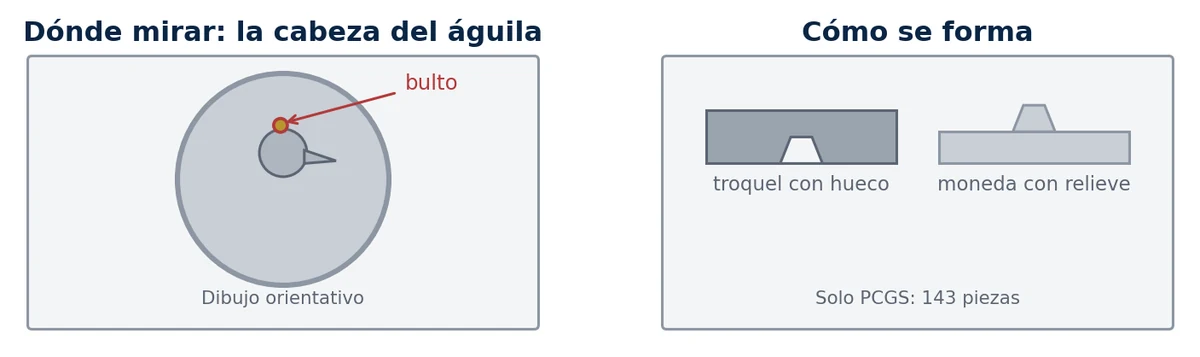
- What it is
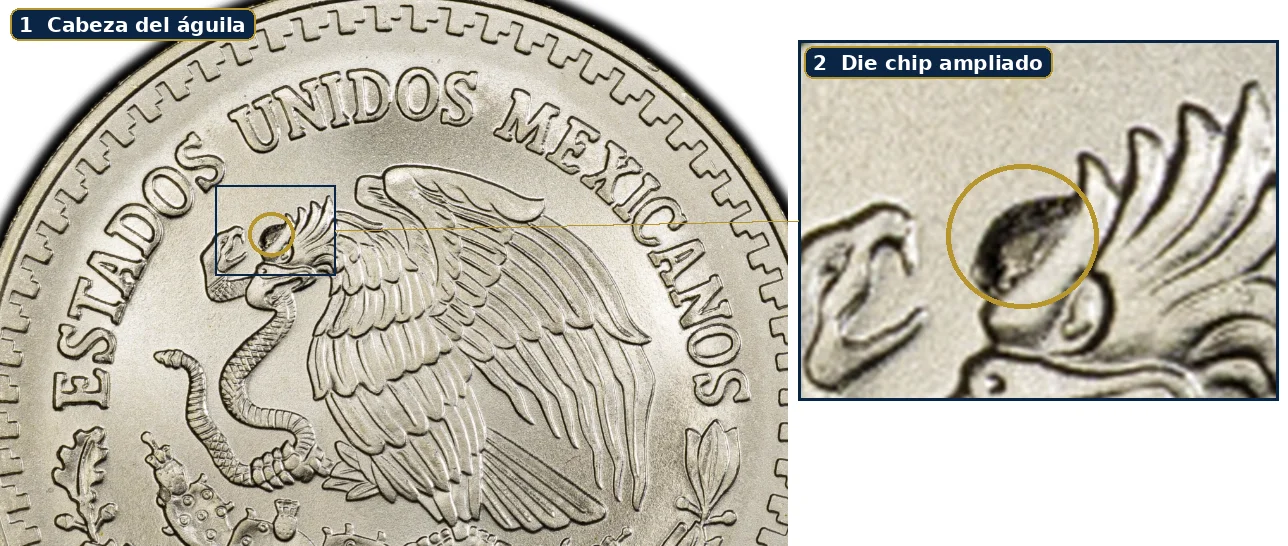
- A small raised lump caused by a fragment breaking off the die. The date is already scarce on its own: 67,000 coins.
- How to identify it
- With a loupe, on the eagle's head on the coat-of-arms side: a rounded lump of metal, part of the surface and the same colour and lustre as the rest.
- How to rule it out
- If it is a different colour, looks porous or seems “stuck on”, it is dirt or later residue.
- Labels
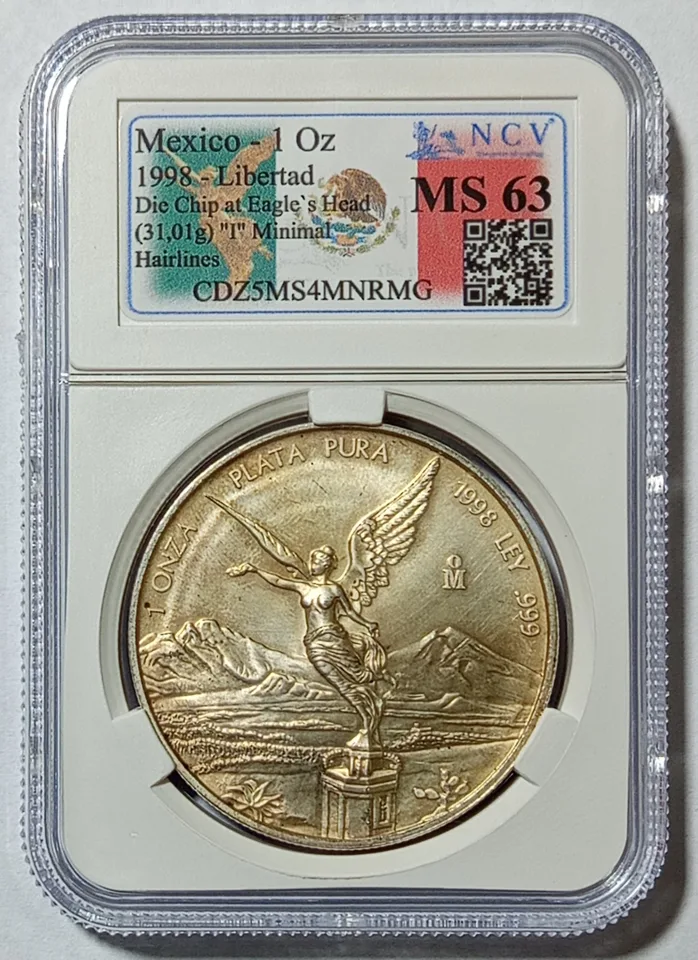
- PCGS: Die Chip at Eagle's Head (143). NCV: Die Chip at Eagle's Head. NGC does not recognise it: it is listed as a normal 1998 (1,002). ANACS does not distinguish it either: its 21 coins from 1998 are all normal.
- Market
- According to PCGS, the 1998 die chip trades at a premium of around 50% over the normal 1998. Its ValueView page records a high of $2,899 in PCGS MS69 (eBay, August 2024). At PCGS no die chip grades above MS69 (22 coins in that grade), so that record sits at the ceiling of its population.
1999/2000 · Mule
Low risk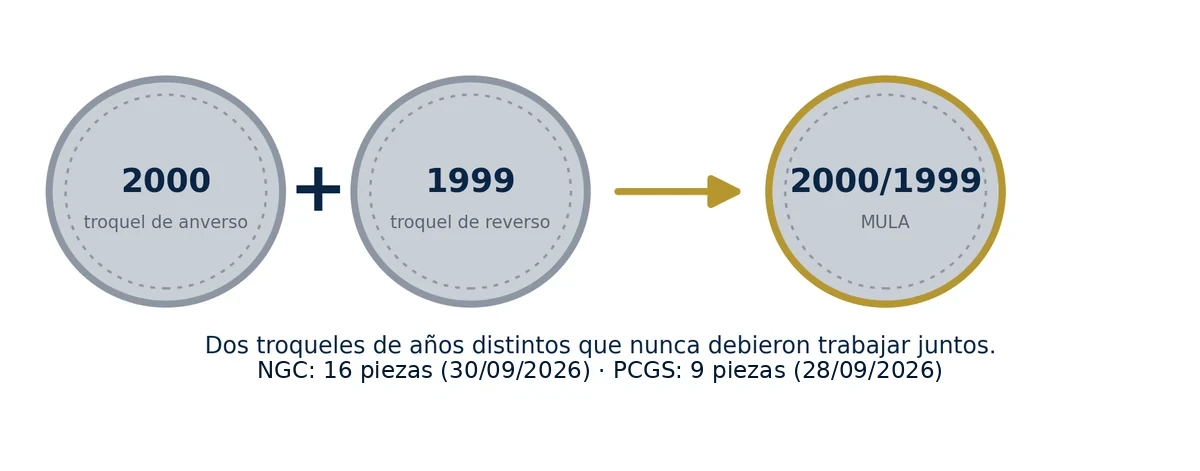
- What it is
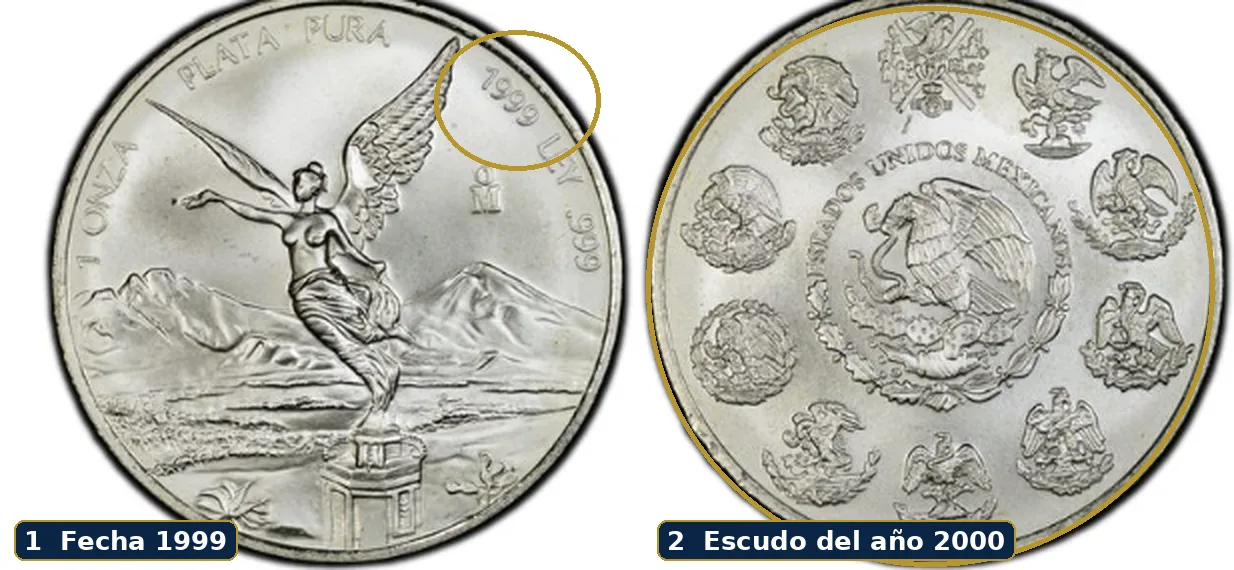
- The major error of the series: it was struck with two dies from different years.
- How to identify it
- Compare each side with a normal 1999 and a normal 2000: one side should match the 1999 and the other the 2000.
- Caution
- Given its price, buy it graded only and check the certificate number on the grading company's website.
- Labels
- NGC: 1999 SILVER OBVERSE OF 2000 - MULE (16). PCGS: (2000)/1999 Mule with 1999 Rev (9). ANACS: REV OF 2000 (20, the finest in MS68). ANACS is, in fact, the company that has graded the most mules.
2007 · Struck-through or corrosion
High risk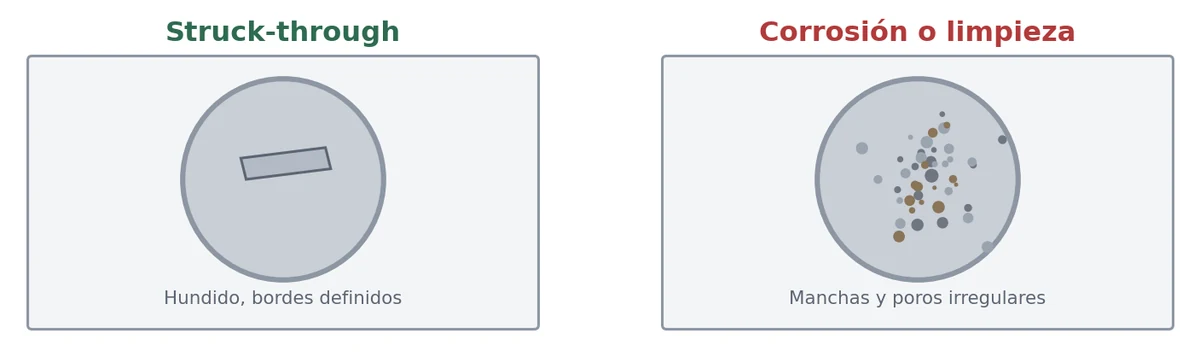
- What it is
- A struck-through happens when an object gets caught between the die and the coin during striking. NGC and PCGS do not recognise any 2007 variety. NCV, however, attributes die pitting (“Die Pitting”) on some coins.
- How to identify it
- A depression with defined edges and sound metal around it: possibly struck-through.
- How to rule it out
- Irregular, shapeless spots, pits or matt areas: corrosion, cleaning or chemical damage.
- Die pitting
- When the die rusts or pits, each hollow in the die leaves a small raised spot on the coin. They repeat on every coin from that die, so they belong to the die-state category, not damage. They are told apart from corrosion because they are raised (metal standing proud), not hollows, and because they appear identically on several coins.
- Labels
- NGC: normal only (1,040). PCGS: normal only (687). ANACS: normal only (9). NCV: Die Pitting.
2015 · 2 oz Proof: Missing Feathers or Detached Wing
No premium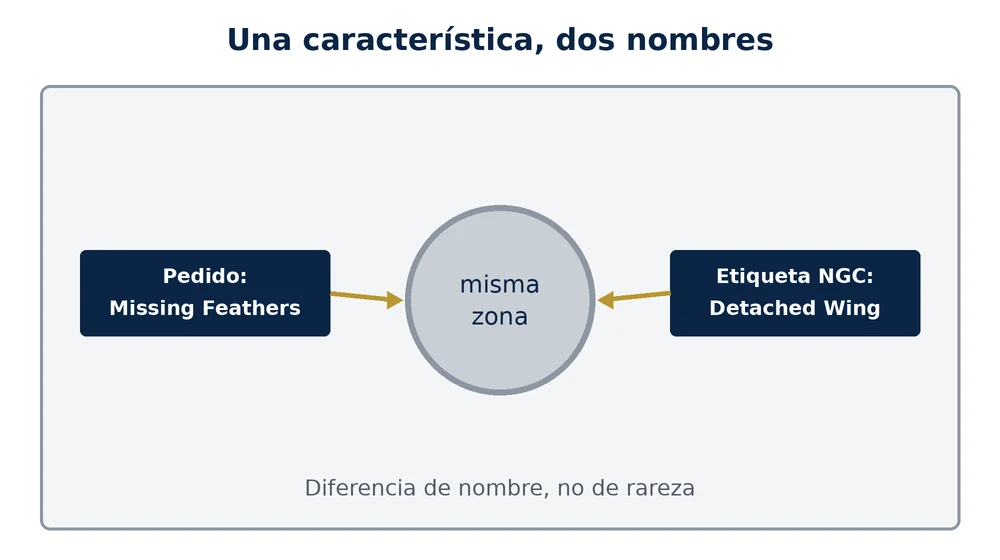
- What it is
- An example of naming: the owner requested “Missing Feathers” and NGC labelled it “Detached Wing”.
- What to check
- That the coin really shows the feature the label describes. The name is no substitute for the diagnosis.
- Labels
- NGC: DETACHED WING.
Case study: an ungraded 1991 Type 2
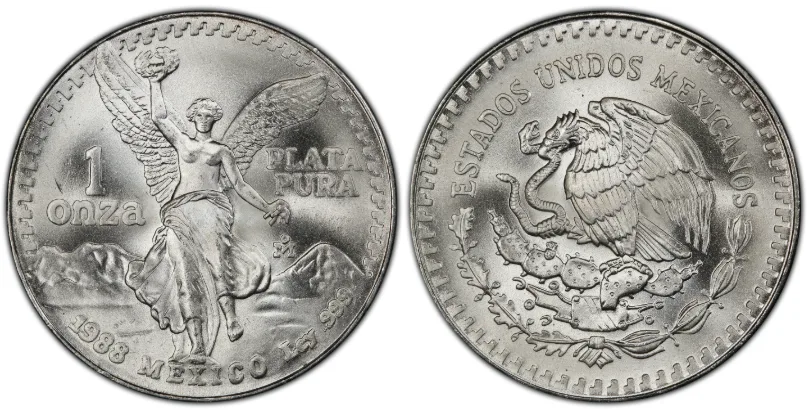
To see how all this works in practice, a recent case: we were offered an ungraded 1991 one-ounce Libertad, photographed from the reverse only. It is the coin in the photo.
Identification. It showed the “OnZa” and “PLaTA PuRA” legend in sans-serif lettering, so it is a Type 2. That reverse continued in use from 1992 to 1995, so the date has to be genuine and legible.
What the census data says. PCGS separates the two types: 1,496 Type 1 and 637 Type 2. NGC groups all 1991 coins together in MS (1,102), so an NGC slab does not tell you whether the coin is Type 1 or Type 2. At PCGS, no Type 2 reaches MS70: the top grade is MS69, with 163 coins, and most sit in MS67–68 (374 across the two grades). NGC's breakdown by grade, according to my reading of the census columns, is as follows:
| Grade | NGC coins |
|---|---|
| MS62 | 4 |
| MS63 | 6 |
| MS64 | 17 |
| MS65 | 61 |
| MS66 | 197 (+3 with + or star) |
| MS67 | 453 (+1) |
| MS68 | 266 (+1) |
| MS69 | 93 |
The low populations in MS62–64 do not indicate rarity: hardly anyone sends low-grade coins for grading because it is not worth it.
Price references (29/09/2026, USD). These are dealer selling prices or asking prices, not completed sales:
| Reference | Price |
|---|---|
| Metal value (silver spot) | $60.80/oz |
| APMEX, ungraded 1991 Type 2 BU | $539 |
| Nashville Coin Gallery, 1991 Type 2 | $491.51 |
| eBay, ungraded Type 2 (asking price) | $1,380–1,450 |
| APMEX, 1991 Type 2 PCGS MS69 | $2,195–2,286 |
PCGS put the price of a Type 2 in MS69 at around $3,000 after the 2025 rise, and considers it harder to find than the famous 1998.
Our assessment of that coin. This is an estimate, not a valuation. The coin looked handled, with marks and uneven lustre, so neither the price of a BU coin nor that of MS67–69 examples applies:
- Ungraded retail sale: around $350–500.
- A reasonable purchase price for a shop: $200–300, with a margin to cover the authenticity risk.
- If it fails the checks: metal value (around $60), or nothing if it is not silver.
Before paying the Type 2 premium we would check weight (31.1 g) and diameter (36 mm), carry out a non-destructive metal test, ideally XRF, ask for a straight-on photo of the obverse to note the cactus dots, and examine the date with a loupe. A PCGS-graded Type 2, even in a mid grade, sells more easily and for a better price than an unslabbed coin.
Populations, labels and premiums
There is no complete, fixed census of Libertad varieties. The numbers change when a coin is reholdered, crosses over to another company or receives a different label, and many coins are still ungraded.
A low population can mean genuine rarity, but it can also mean low demand, few submissions or a variety that hardly anyone requests. That is why I always check it on the day of the transaction, in the NGC Census and the PCGS Population Report, and keep a dated screenshot.
The premium attached to a label does not always carry the same weight:
- Broad recognition: a mule or a type change that several companies understand. The premium travels with the coin.
- One company only: a micro-variety that exists in a single registry. If the coin changes slab, the premium can disappear.
- Narrative: a social-media nickname, an “only two exist” with no census behind it, or supposed exclusivity. This is the most dangerous premium.
In modern silver, MS70 is the norm
On recent Libertads the top grade is common. According to my reading of the two censuses:
| Year | NGC: total / MS70 | PCGS: total / MS70 |
|---|---|---|
| 2022 | 6,740 / 5,006 (74%) | 5,560 / 2,917 (52%) |
| 2023 | 8,535 / 5,256 (62%) | 7,521 / 5,212 (69%) |
| 2024 | 10,460 / 4,432 (42%) | 11,307 / 7,802 (69%) |
The extreme case is at ANACS: of its 4,518 Libertads from 2010, 4,506 are MS70; of the 4,531 from 2011, 4,509; and of the 2,635 from 2012, 2,606. Close to 99% in all three years. A figure like that points to bulk submissions of freshly minted coins: in 2016, without that kind of submission, ANACS has only 36 coins, 6 of them MS70. An ANACS MS70 on a modern date is no rarity.
That is why a modern Libertad in MS70 has little scarcity to justify a large premium: the value lies in low-mintage years or special labels. The 2025 has low populations (76 at NGC, plus 41 “First Day of Issue”, and 47 at PCGS) because the coin is new, not because it is rare. At the other end, a low population in modest grades is not rarity either: it simply does not pay to grade a low-grade coin.
A note on the gold Libertad
The NGC census reveals a striking point about the one-ounce gold Libertad: it is the segment with the least graded supply in the whole series. Some dates have just a handful of coins: 1994 has 2, 1991 has 3, 2004 has 5, 2006 has 6, 2007 has 7 and 2000 has 8. Only 2014 exceeds 300. Part of the explanation is that little gold bullion gets graded, not just low mintages. Even so, if a gold Libertad from one of those dates comes into the shop, it deserves a careful look before being sold at metal value.
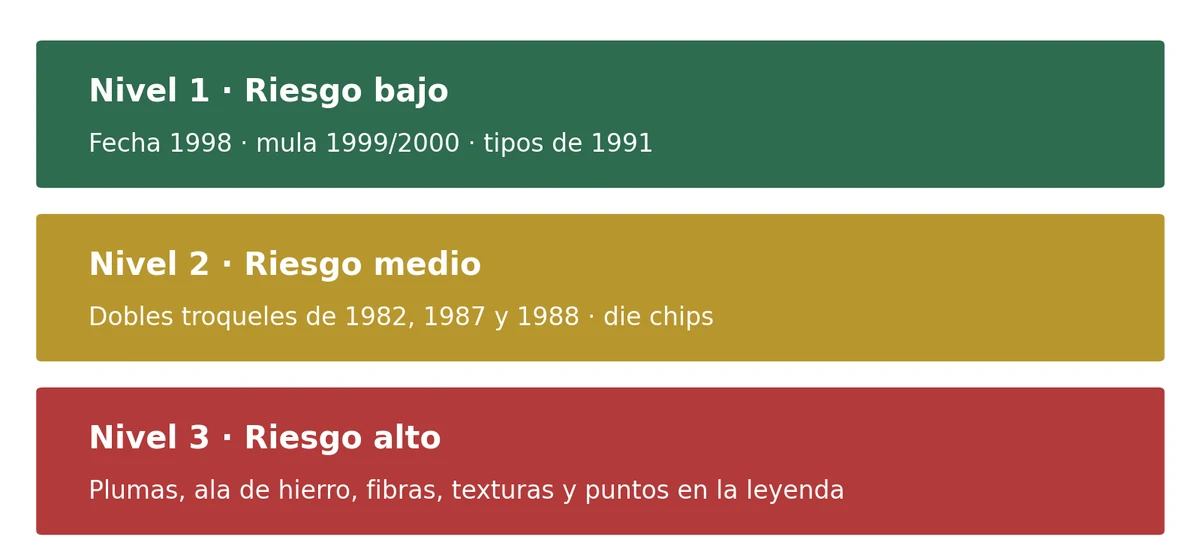
My order of priority for a premium is: date and official mintage, then structural variety recognised by more than one company, then certified visible error and, last of all, single-label micro-variety.
Ranking: which dates are graded most relative to their mintage
Adding up the three major grading companies (NGC, PCGS and ANACS), you can work out what share of each mintage has been through a slab. The result does not measure rarity, but it says a lot about where market interest lies.
| # | Year | Mintage | NGC | PCGS | ANACS | Total graded | % of mintage |
|---|---|---|---|---|---|---|---|
| 1 | 2025 | 300 | 117 | 47 | 0 | 164 | 54.7% |
| 2 | 2022 | 350,000 | 6,740 | 5,560 | 21 | 12,321 | 3.52% |
| 3 | 1998 | 67,000 | 1,002 | 1,051 | 21 | 2,074 | 3.10% |
| 4 | 2024 | 718,000 | 10,460 | 11,307 | 19 | 21,786 | 3.03% |
| 5 | 2020 | 300,000 | 2,308 | 6,263 | 41 | 8,612 | 2.87% |
| 6 | 2018 | 300,000 | 4,583 | 3,679 | 31 | 8,293 | 2.76% |
| 7 | 2023 | 613,000 | 8,535 | 7,521 | 49 | 16,105 | 2.63% |
| 8 | 1999 | 95,000 | 1,270 | 915 | 37 | 2,222 | 2.34% |
| 9 | 2014 | 429,200 | 5,059 | 1,699 | 1,128 | 7,886 | 1.84% |
| 10 | 1997 | 100,000 | 861 | 765 | 18 | 1,644 | 1.64% |
| 11 | 1995 | 500,000 | 4,932 | 2,377 | 24 | 7,333 | 1.47% |
| 12 | 2021 | 450,000 | 3,301 | 2,961 | 14 | 6,276 | 1.39% |
| 13 | 2019 | 402,000 | 1,211 | 3,926 | 14 | 5,151 | 1.28% |
| 14 | 2015 | 901,500 | 6,156 | 4,900 | 444 | 11,500 | 1.28% |
| 15 | 1983 | 1,002,200 | 7,374 | 4,475 | n/a | 11,849 | 1.18% |
| 16 | 2013 | 774,100 | 4,448 | 1,043 | 2,836 | 8,327 | 1.08% |
| 17 | 1985 | 2,017,000 | 13,101 | 6,243 | 241 | 19,585 | 0.97% |
| 18 | 1982 | 1,050,000 | 5,852 | 3,301 | 129 | 9,282 | 0.88% |
| 19 | 2007 | 200,000 | 1,040 | 687 | 9 | 1,736 | 0.87% |
| 20 | 1984 | 1,015,500 | 4,330 | 3,274 | 69 | 7,673 | 0.76% |
| 21 | 2010 | 1,000,000 | 1,721 | 1,305 | 4,518 | 7,544 | 0.75% |
| 22 | 1994 | 400,000 | 1,314 | 1,549 | 37 | 2,900 | 0.73% |
| 23 | 2012 | 746,400 | 1,323 | 1,403 | 2,635 | 5,361 | 0.72% |
| 24 | 1996 | 300,000 | 947 | 932 | 23 | 1,902 | 0.63% |
| 25 | 2011 | 1,200,000 | 1,029 | 1,766 | 4,531 | 7,326 | 0.61% |
| 26 | 2016 | 1,437,500 | 4,115 | 4,544 | 36 | 8,695 | 0.60% |
| 27 | 2017 | 636,000 | 2,534 | 379 | 12 | 2,925 | 0.46% |
| 28 | 1993 | 1,000,000 | 2,880 | 1,130 | 43 | 4,053 | 0.41% |
| 29 | 1987 | 500,000 | 777 | 1,063 | 66 | 1,906 | 0.38% |
| 30 | 2000 | 455,000 | 935 | 772 | 21 | 1,728 | 0.38% |
| 31 | 2001 | 385,000 | 714 | 683 | 9 | 1,406 | 0.37% |
| 32 | 2006 | 300,000 | 358 | 444 | 9 | 811 | 0.27% |
| 33 | 2003 | 500,000 | 404 | 699 | 7 | 1,110 | 0.22% |
| 34 | 1986 | 1,699,426 | 2,009 | 1,467 | 34 | 3,510 | 0.21% |
| 35 | 1991 | 1,650,518 | 1,102 | 2,133 | 38 | 3,273 | 0.20% |
| 36 | 2008 | 950,000 | 745 | 872 | 21 | 1,638 | 0.17% |
| 37 | 2004 | 550,000 | 398 | 521 | 11 | 930 | 0.17% |
| 38 | 2005 | 800,000 | 608 | 455 | 12 | 1,075 | 0.13% |
| 39 | 2009 | 1,650,000 | 791 | 1,051 | 17 | 1,859 | 0.11% |
| 40 | 1989 | 1,396,500 | 693 | 861 | 18 | 1,572 | 0.11% |
| 41 | 1988 | 1,500,500 | 767 | 819 | 14 | 1,600 | 0.11% |
| 42 | 1990 | 1,200,000 | 414 | 647 | 30 | 1,091 | 0.09% |
| 43 | 2002 | 1,270,000 | 469 | 456 | 13 | 938 | 0.07% |
| 44 | 1992 | 2,458,000 | 619 | 864 | 26 | 1,509 | 0.06% |
Figures in MS (each date's varieties included; excluding prooflike, proof, antique finish and “details” grades). NGC as of 30/09/2026; PCGS and ANACS as of 02/10/2026. Mintages: Bank of Mexico from 1993 and the Standard Catalog of World Coins for 1982–1992, as compiled by Hero Bullion. ANACS data is missing for 1983. For 1988 some sources give 1,000,000 coins instead of 1,500,500; with that figure, the percentage would be 0.16%.
Five takeaways:
- The 2025 is a special case. With only 300 coins struck, 164 have already been graded: more than half the mintage.
- Scarce dates get graded a lot. The 1998 (3.1%), the 1999 (2.3%) and the 1997 (1.6%) are in the top ten: when a coin is worth more, slabbing it pays off.
- Modern dates are high too, but for a different reason. From 2018 to 2024 between 2.6% and 3.5% of the mintage is graded, mostly through bulk submissions of freshly minted coins chasing MS70. This is grading new product, not rarity. The same explains why 2010–2013 rank high, thanks to the ANACS batches.
- The least graded are the big mintages of the eighties and nineties. The 1992 (0.06%), 2002, 1990, 1988 and 1989 close the table. Partly because they are cheap and not worth grading; but among collectors the 1988 and 1989 have a reputation for being hard to find in good condition. A low percentage can hide scarcity in high grades.
- The percentage is not rarity. The figures may include coins counted twice (through reholdering or resubmission) and do not include coins that have never been graded. They are for comparing dates with each other, not for estimating how many remain.
Auction prices achieved
Populations tell you how many coins there are; auctions tell you what was actually paid for them. These are completed sales (not asking prices), in US dollars and, unless stated otherwise, including the buyer's premium.
Normal 1998: the market benchmark
The 1998 is the key date of the series and the one with the most documented sales. GreatCollections results show rises across all the high grades:
| Grade | Results |
|---|---|
| MS70 | PCGS: $15,700 (May 2022, eBay, recorded by PCGS) · NGC: $46,125 (7 June 2026, GreatCollections, 23 bids) |
| MS69 | PCGS: $1,114 (June 2023) · NGC: $1,688 (June 2024) · NGC: $3,600 (November 2025) · NGC: $5,063 (June 2026) |
| MS68 | PCGS: $686 (November 2022) · PCGS: $2,925 (January 2026) · PCGS: $3,150 (June 2026) |
| MS67 | PCGS: $632 (November 2022) · NGC: $1,098 (May 2025) |
In three years, the selected MS69 sales have more than quadrupled. The jump in MS70 comes from the combination of a low mintage and a grade ceiling: at the time of the sale there were only 10 NGC and 5 PCGS coins in MS70.
Varieties
| Coin | Best recorded result | Source |
|---|---|---|
| 1998 die chip | $2,899 in PCGS MS69 (30/08/2024, eBay) | PCGS ValueView record |
| 1991 Type 2 | $850 in PCGS MS69 (27/03/2024, eBay) | PCGS ValueView record |
| 1999/2000 mule | $7,000 for the first coin discovered (PCGS, 2015) and $6,000 for the second, in a private sale | Coin World and Coin Update |
Three important caveats:
- The ValueView record is not always up to date. The one for the 1991 Type 2 is from March 2024 (and in December 2018 an MS69 sold for just $200). The market has risen since: in 2025 PCGS estimated around $3,000 for a Type 2 in MS69 and said it had already overtaken the normal 1998 in that grade. That figure is a PCGS estimate, not a sale.
- The mule rarely comes up at auction. An NGC MS66 coin was auctioned at Heritage in April 2020, but the price is only visible to registered users. With so few coins, every sale sets the market.
- The doubled dies have no meaningful public records. As a reference (not an auction), PCGS estimated in 2025 around $200 for a 1987 DDO in MS66 and around $300 for a 1988 DDO in the same grade.
An auction result depends on the specific coin, its eye appeal, the slab, the auction house and who is bidding that day. Use them as a market reference, not as a guaranteed price for another coin.
What to check before buying or selling
If you are buying, before paying any premium:
- Ask for photos of the obverse, the reverse, the edge and a close-up of the feature.
- Ask for the certificate number and verify it on the grading company's website.
- Confirm that the label describes exactly what is being advertised.
- Check the current population and keep a dated screenshot.
- Look for completed sales, not asking prices.
- Check weight, diameter and authenticity.
- Ask whether the attribution would stand at another grading company.
- Be wary of “unique” or “only two exist” without documentation.
If you are selling, list separately in the description the date and its mintage, the grade, the variety or error, the grading company, the certificate number and the population with the date you checked it. Never present one company's population as a worldwide total.
1998 Libertad, graded by [company], grade [grade], with attribution [exact name]. The population shown refers only to the registry checked on [date]. The premium is based on the 67,000 mintage and the specific attribution, not on a worldwide population figure.
My verdict
There is no basis for saying that only NGC recognises Libertad varieties, or that it systematically grades errors badly. There are, however, debatable attributions and inconsistent names, and each one has to be discussed with the coin in hand.
The rule I apply at Andorra Metals: do not pay a premium for a variety's name until you have checked the coin, the label, the certificate, the population and the market.
Sources: Mintages: Bank of Mexico (1993–2025) and Standard Catalog of World Coins (1982–1992), compiled by Hero Bullion (29/08/2026). · Auction prices: GreatCollections via CoinWeek (20/07/2026) and Greysheet; PCGS ValueView records (checked on 02/10/2026); Coin World and Coin Update for the mule; PCGS, “The Brilliant Uncirculated Mexican Silver Onza Libertad” for the estimates. · PCGS Population Report, Onza (1982 to Date) and its MS 60-70 grade view (pcgseurope.com/popdetail/5434-ms-0/tab3) · PCGS, 1998-Mo Onza Libertad listing (mintage 67,000) · NGC Census, Mexico 1905 to Date, 1 Onza. NGC checked on 30/09/2026; PCGS and ANACS on 02/10/2026. Diagnostic photos for 1982, 1983, 1987 and 1988: NGC VarietyPlus. Photos of the 1982 DDO, 1988 DDO, 1989, both 1991 coins, 1998 and the mule: PCGS. Photos of the NCV slabs and the 1991: Andorra Metals. 1991 prices: APMEX, Nashville Coin Gallery, eBay and PCGS, checked on 29/09/2026.
More sources: PCGS Population Report, Onza MS 60-70 · PCGS ValueView, 1998-Mo Die Chip at Eagle's Head · PCGS ValueView, 1991-Mo PLaTA PuRA · PCGS: The Brilliant Uncirculated Mexican Silver Onza Libertad · CoinWeek: Perfect 1998 Silver Libertad Brings $46,125 · Coin Update: Ninth Uncirculated example of 1999/2000 Libertad mule · Hero Bullion: Mexican Silver Libertad mintages